What Is a Public Transport Ticketing System?
Components, Benefits and Key Considerations
- March 10, 2026
- 08:51 am
Public transport ticketing has changed significantly over the past decade. What was once a relatively simple process based on paper tickets or closed card systems is now part of a much broader digital ecosystem.
Today, a public transport ticketing system often includes validators, onboard terminals, payment technologies, communications infrastructure, and software layers that work together to support both passenger journeys and operator workflows.
For transport operators, authorities, and system integrators, understanding how these systems are structured is essential. Choosing the right architecture is not just a question of accepting more payment methods. It is also about reliability, maintainability, interoperability, and long-term upgradeability.
1. What is a public transport ticketing system?
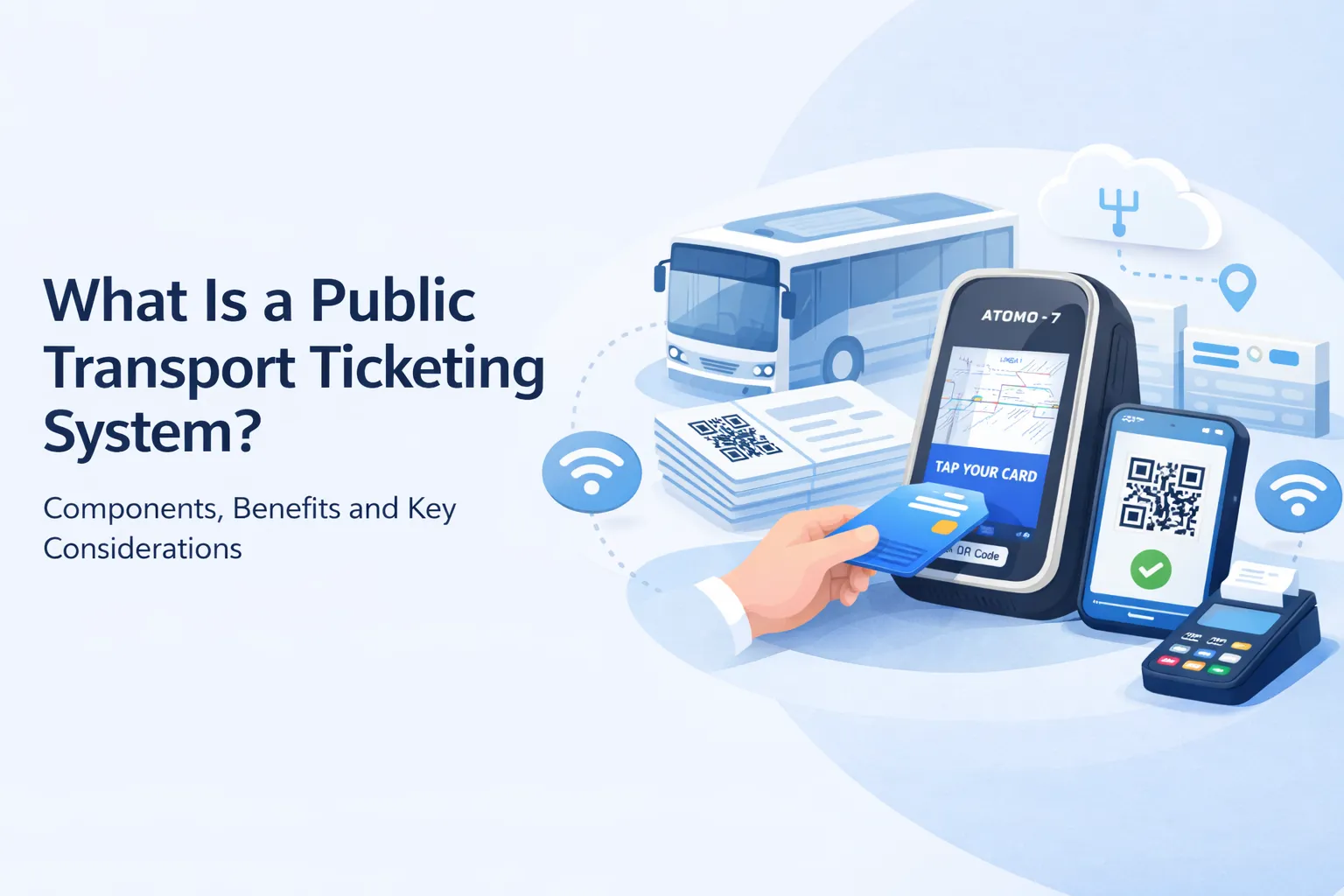
A public transport ticketing system is the combination of technologies used to issue, validate, accept, record, and manage travel entitlements across a transport network.
In practical terms, it is the system that allows passengers to travel using one or more media such as paper tickets, smart cards, contactless bank cards, QR codes, or mobile devices, while also allowing operators to verify travel rights, collect operational data, and support fare collection processes.
A modern ticketing system is rarely a single device or a single software platform. It is usually an ecosystem made up of several connected components, each with a specific role in the passenger journey and the broader transport operation.


2. The main components of a modern public transport ticketing system
Passenger-facing validation devices
These are the devices passengers interact with directly when boarding or validating a trip. Depending on the deployment, they may support paper ticket validation, smart cards, QR and barcode scanning, NFC-based tickets, contactless EMV payments, and mobile ticketing.
In many environments, the validator becomes the most visible part of the ticketing system because it is the point where passenger interaction happens in real time.
Onboard terminals and control devices
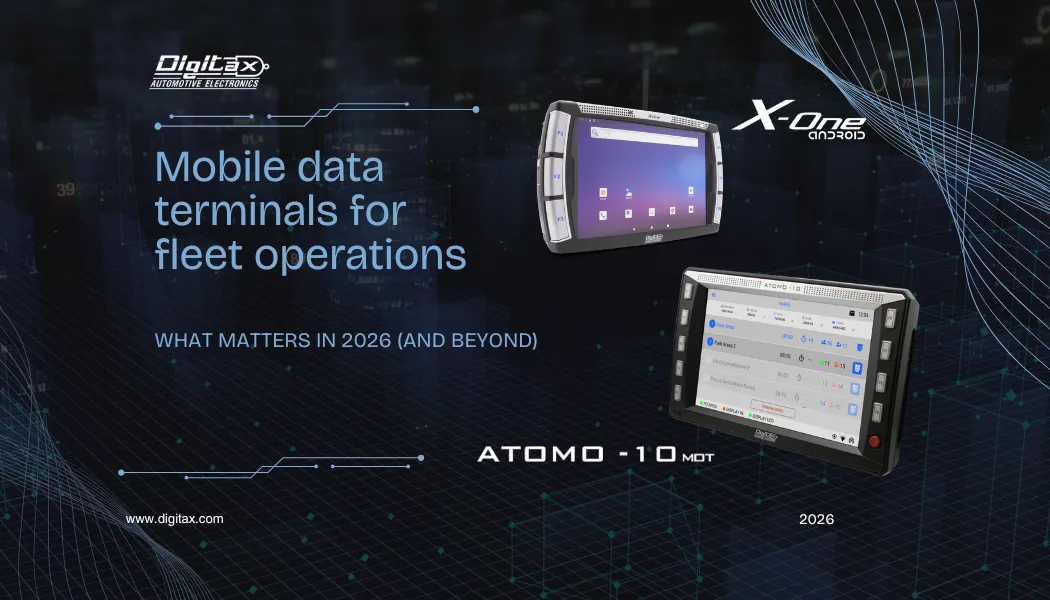
In bus and vehicle-based operations, ticketing is often connected to a wider onboard environment. Mobile Data Terminals and other control devices can support route management, peripheral coordination, communication with validators and printers, and integration with operational systems already installed in the vehicle.
This layer matters because a ticketing system does not operate in isolation. In real deployments, it often needs to interact with doors, odometers, passenger counters, printers, vehicle panels, CAN-based information, and other onboard inputs
Payment and fare collection technologies
A public transport payment system may include different models at the same time, such as closed-loop transit cards, open-loop contactless bank card acceptance, QR-code ticketing, mobile app-based tickets, and account-based ticketing logic in the wider system environment.The best approach depends on the network, passenger habits, fare policy, and existing infrastructure.
What matters is that the ticketing environment can support the media and workflows the operator actually needs.
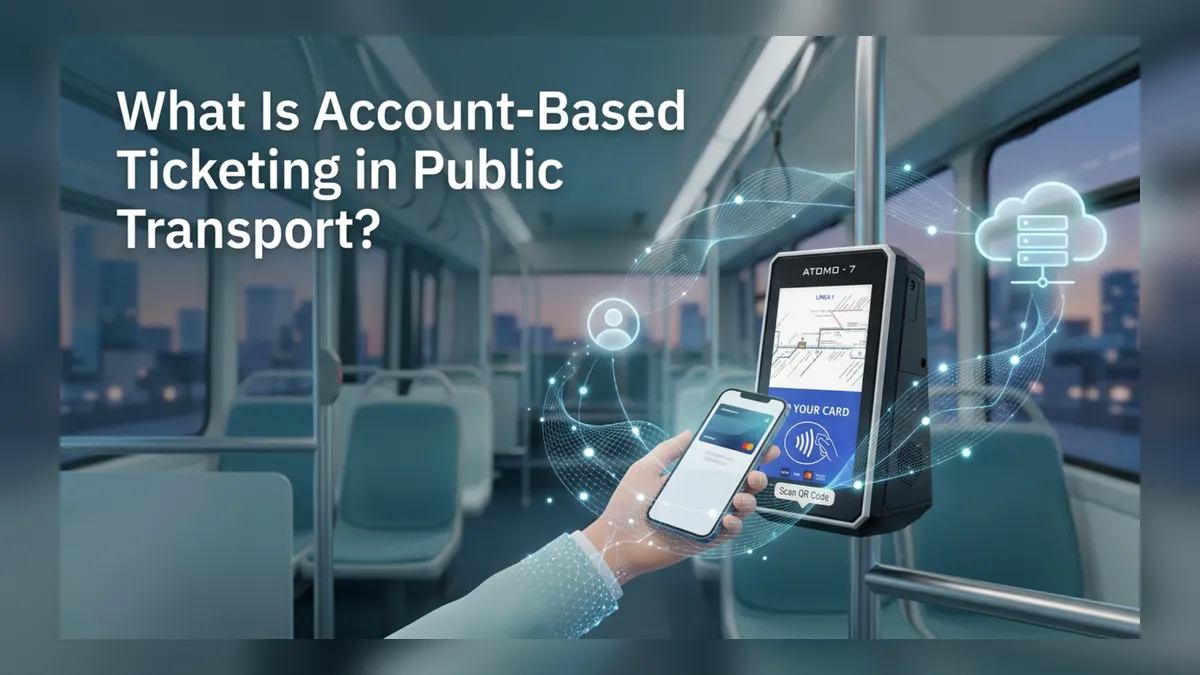
Many modern environments also rely on account-based ticketing , where travel rights and fare logic are managed beyond the card or token itself.
Connectivity and communications
Modern ticketing systems depend on data exchange. Devices need reliable communication for transaction handling, synchronization, remote diagnostics, software and firmware updates, status monitoring, and device management.
This becomes especially important in distributed fleets, where uptime and maintainability are just as important as feature sets.
Back-office and management layers
Although passengers do not see them, back-office layers are essential to the broader system. These can support functions such as fare logic, transaction processing, reporting, operational visibility, and device monitoring.
Not every transport project uses the same model, but in most cases the field devices and the software environment must work together in a predictable and interoperable way.

For a deeper look at validation media already covered on the site, see Digitax Contactless Validation Technology
TABLE of CONTENTS
-
1. What is a public transport ticketing system?1. What is a public transport ticketing system?
-
2. The main components of a modern public transport ticketing system2. The main components of a modern public transport ticketing system
-
3. How a public transport ticketing system works in practice3. How a public transport ticketing system works in practice
-
4. Why system architecture matters4. Why system architecture matters
-
5. What operators should look for in a public transport ticketing system5. What operators should look for in a public transport ticketing system
-
6. The role of validators and onboard devices6. The role of validators and onboard devices
-
7. A broader view of smart ticketing7. A broader view of smart ticketing
-
8. Conclusion8. Conclusion
-
FAQFAQ
3. How a public transport ticketing system works in practice
From the outside, ticketing can seem simple: a passenger taps a card, scans a code, or presents a digital ticket. In reality, several layers may be involved.
A typical journey might look like this:
- A passenger presents a ticket, card, phone, or payment token.
- A validator reads the media and checks the required travel data or payment status.
- The onboard system exchanges information with connected devices or other vehicle-side functions when required.
- Data is transmitted or synchronized with the wider ticketing environment.
- The operator receives the transaction and operational information needed for control, reporting, and service continuity.
In modern transport environments, this flow is not only about fare collection. It is also linked to passenger throughput, service quality, maintenance efficiency, and long-term system scalability.

Why this matters for integrators
For integrators, the real challenge is not deploying single devices, but making every part of the ticketing ecosystem work together seamlessly. A modular, interoperable approach helps simplify integration, support future upgrades, and deliver more reliable transport systems for operators and passengers alike.
4. Why system architecture matters
Not all ticketing systems are structured in the same way, and this is where many projects succeed or struggle.
A well-designed architecture should take into account:
- the current infrastructure already installed
- the number and type of onboard devices required
- accepted media and payment methods
- communication protocols and interfaces
- maintenance and replacement workflows
- upgradeability over time
This is especially relevant for operators modernizing an existing fleet.
In many cases, replacing an entire system at once is neither necessary nor practical.
A more realistic path may involve integrating new devices into an existing environment, provided that interoperability and standard communication protocols are properly considered.
This is one of the reasons why modularity matters so much in public transport ticketing.
A flexible architecture can reduce unnecessary complexity, simplify maintenance, and make future upgrades easier.

Flexible Bus Ticketing Architecture
In a modern bus environment, flexible architecture means making validators, onboard terminals and system integrations work together reliably over time.
5. What operators should look for in a public transport ticketing system
Reliability in the field
Public transport devices work in demanding conditions. Vibration, temperature variations, dust, moisture, power fluctuations, and continuous daily use all affect long-term performance.
Support for multiple ticketing media
Operators increasingly need to support more than one validation and payment model. A system should be able to adapt to real passenger behavior, not force a single rigid workflow.
Ease of maintenance
Fast servicing and quick device replacement can make a major difference in fleet uptime. Maintenance is not a side issue in ticketing infrastructure; it is part of overall system performance.
Integration with onboard infrastructure
Validators and terminals may need to communicate with printers, doors, passenger counters, vehicle electronics, or dispatch functions. If this layer is overlooked, even a promising ticketing project can become difficult to manage.
Lifecycle and upgradeability
Technology cycles move faster than fleet replacement cycles. For this reason, the ability to update hardware platforms, operating systems, communications modules, and device-side software becomes increasingly important.
To understand the role of devices within fully connected fleets, take a look at our article on
👉How to improve fleet efficiency and reduce downtime with Digitax connected solutions
6. The role of validators and onboard devices
When people talk about ticketing modernization, the conversation often focuses on apps, passenger experience, or fare policy. Those elements matter, but the onboard and field layer remains critical.
Validators and onboard terminals shape the real-world experience of the system because they influence:
- how quickly passengers can validate or pay
- how easily devices can be installed and maintained
- how reliably transactions are handled in daily service
- how smoothly the ticketing system integrates with the rest of the vehicle environment
In other words, even the most advanced fare logic still depends on reliable field execution.
In practice, validators and onboard devices remain central to:
- passenger interaction
- device coordination
- day-to-day operational reliability

Where passenger interaction meets real-world ticketing performance.
Validators are more than access points for payment or validation. They are part of the operational layer that connects passenger journeys with onboard infrastructure, helping modern ticketing systems work reliably in daily service
A smart ticketing system for public transport is not defined by a single payment method or a single device. It is defined by how effectively different layers work together.
A strong system should combine passenger-friendly validation, dependable onboard infrastructure, flexible payment support, maintainable hardware, clear integration logic, and room for future upgrades.
This broader view is useful for both operators planning a new deployment and integrators working on modernization projects. It shifts the conversation from “which device should we install?” to “what kind of ticketing environment do we want to support over time?”

A public transport ticketing system is much more than a validation point or a fare collection interface. It is a connected operational environment where passenger interaction, onboard devices, payment technologies, communications, and system integration all play a role.
For transport operators, the key question is not only which ticketing model to adopt, but how to build an infrastructure that is reliable, adaptable, and ready to evolve.
That is why the most effective projects usually take a system-level view from the start: not just fares and payments, but also devices, interfaces, maintenance, and long-term operational fit.
At Digitax, this broader perspective matters because modern ticketing depends not only on fare logic, but also on dependable validation devices, onboard terminals, and integration-ready hardware.
Contact us To Explore Our Solutions for modern public transport systems
Click HereFAQ
It is the set of technologies used to issue, validate, accept, and manage travel entitlements across a transport network, including passenger-facing devices, payment methods, communications, and operational system layers.
Most systems include validators, onboard terminals, payment and validation technologies, connectivity infrastructure, and back-office or management layers.
A validator is one component of the system. The full ticketing system also includes onboard integration, communications, payment handling, and management layers beyond the passenger-facing device
Yes. Many modern systems are designed to support combinations of paper tickets, transit cards, QR codes, NFC devices, and contactless payments, depending on project requirements.
Because they connect ticketing functions with the real operating environment of the vehicle, including peripherals, communications, diagnostics, maintenance, and operational data flows.